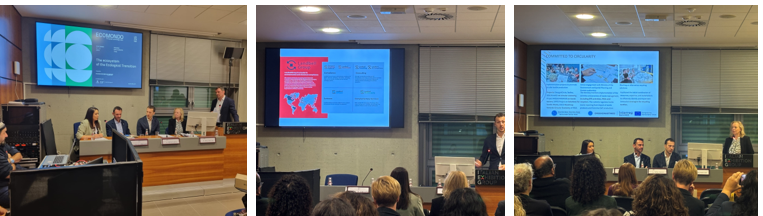
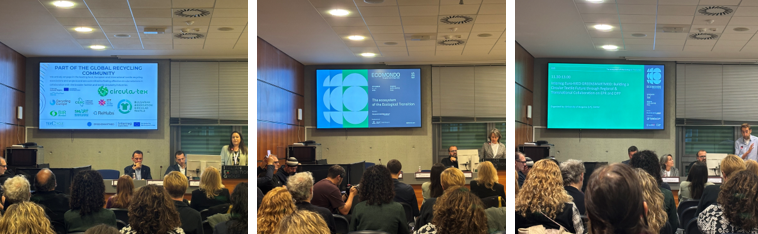
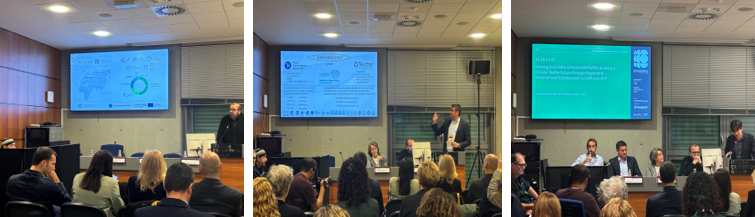
On 6 November 2025, the transnational event Building a Circular Textile Future through Regional & Transnational Collaboration on EPR and DPP took place within the framework of the ECOMONDO international trade fair in Rimini (Italy). Organised by the GREENSMARTMED project, the event offered a key opportunity to discuss current challenges and future perspectives of the Mediterranean textile manufacturing sector.
The event was organised by the Italian partners of GREENSMARTMED – the University of Bergamo (Lead Partner), CUEIM and AFIL – with the support of CERTH and TEXFOR.
A SHARED CHALLENGE FOR THE MEDITERRANEAN TEXTILE SECTOR
The transition towards a green economy calls for more sustainable, efficient and responsible production models across the entire value chain. This challenge is particularly relevant for small and medium-sized enterprises (SMEs), which represent a large share of Mediterranean textile production and significantly contribute to energy consumption and emissions.
Against this backdrop, the event fostered a reflection on a sector that accounts for around 10% of global greenhouse gas emissions and nearly 20% of freshwater consumption. Special attention was given to the potential of regional and transnational cooperation in promoting circular practices, focusing on two key instruments: EPR (Extended Producer Responsibility) and DPP (Digital Product Passport), as the backbone of Circular Manufacturing.
In her ope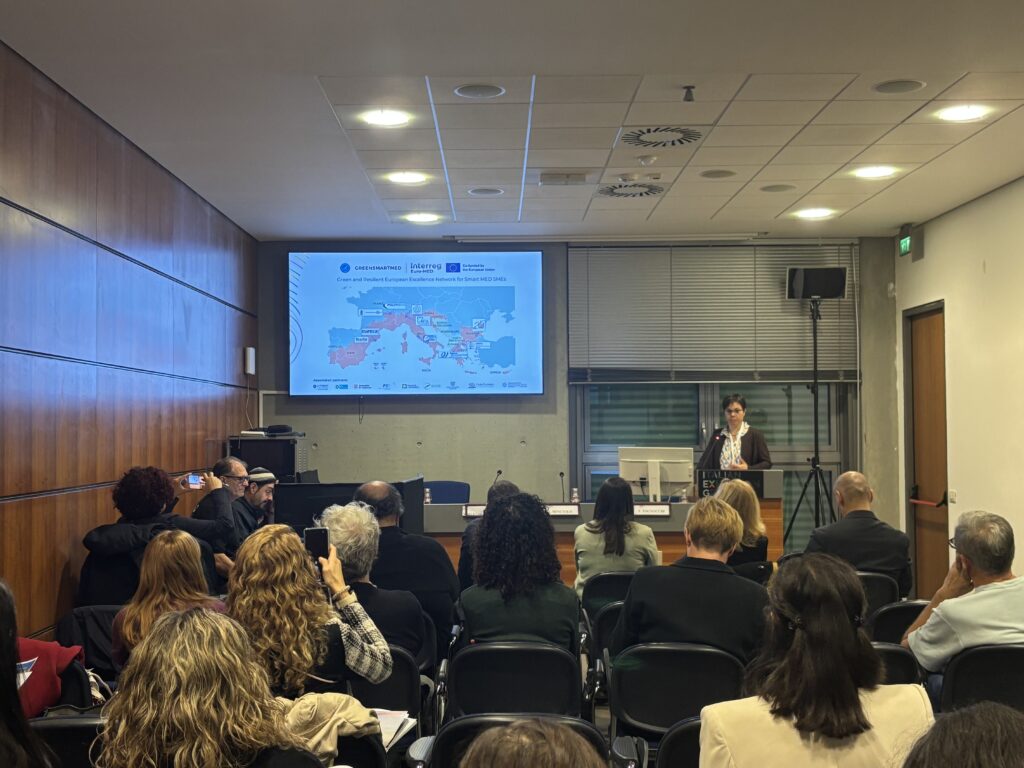 ning speech, Ms Fabiana Pirola (University of Bergamo, Lead Partner of GREENSMARTMED), outlined the context, objectives and tools of GREENSMARTMED. She particularly emphasised the opportunities for improving the sustainability of industrial processes and collaboration between different stakeholders in a quadruple helix approach. Ms Pirola then recalled the importance of opportunities such as those offered in the context of ECOMONDO to continue promoting the work of the project in supporting SMEs, which often have limited resources and face challenges in implementing tools defined at European level.
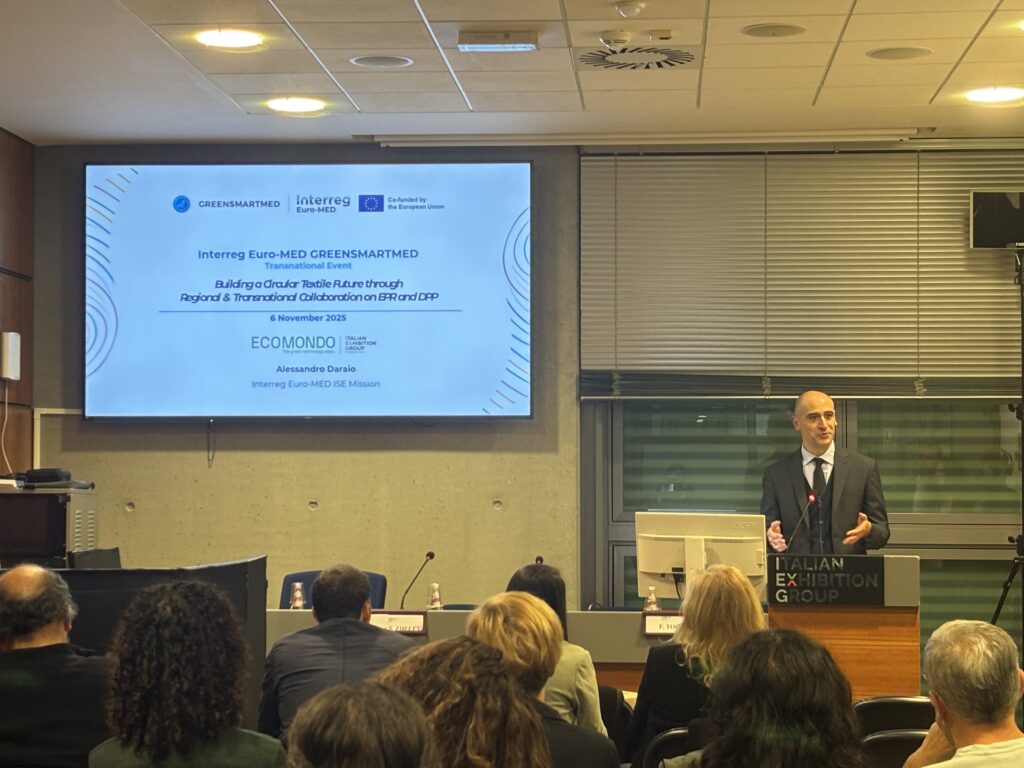
This was followed by an intervention from Mr Alessandro Daraio (Emilia-Romagna Region, Lead partner of Dialogue4Innovation, Governance project within the Innovative Sustainable Economy Mission), who provided an overview of the Mission’s cooperation framework. He thttps://innovative-sustainable-economy.interreg-euro-med.eu/hen underlined the role of GREENSMARTMED in fostering innovation diffusion, bridging territorial gaps and engaging stakeholders often overlooked by public policies. He also reaffirmed the importance of Governance projects as strategic amplifiers of Thematic projects.
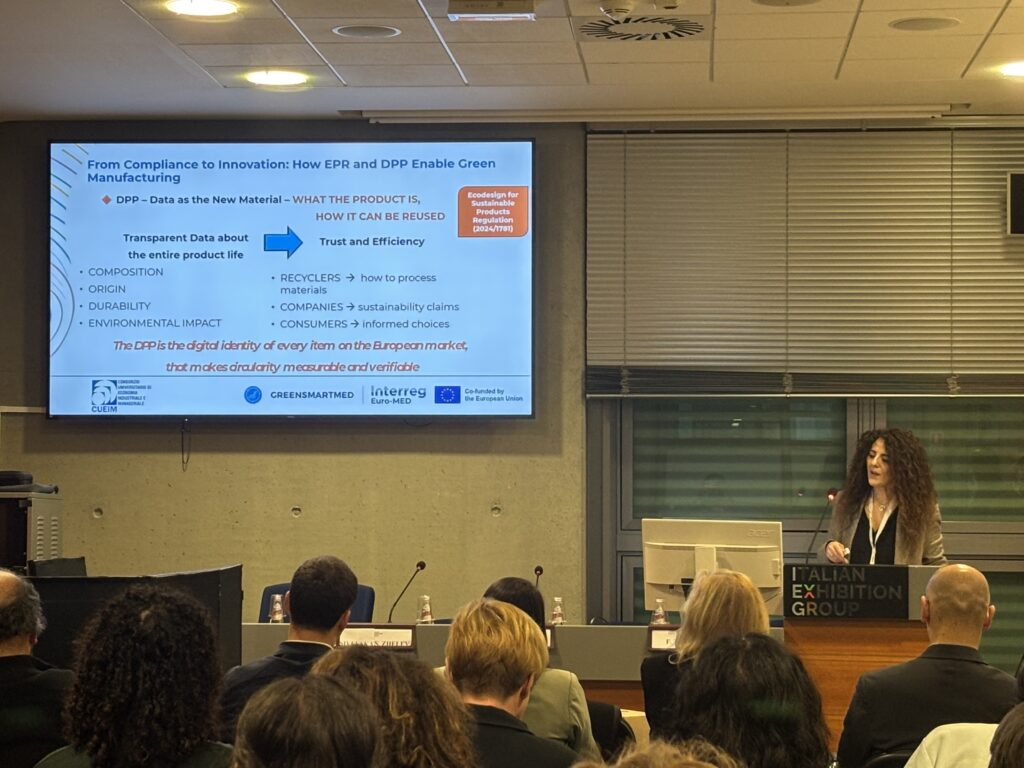 Ms Valentina Oliviero (CUEIM) introduced the two roundtables dedicated to EPR and DPP, outlining their potential to promote a more circular, transparent and responsible Mediterranean textile supply chain. As both tools are part of the European regulatory framework, the event aimed to raise awareness of their correct implementation and regulatory compliance, while exploring opportunities and barriers through the direct experiences of stakeholders from across the Mediterranean area.
FIRST ROUNDTABLE: MAKING EPR WORK ACROSS BORDERS
Moderated by Mr Valantis Ketikidis (CERTH), the first roundtable focused on EPR, an environmental policy approach that assigns producers responsibility for the entire life cycle of their products, from design and marketing to take-back, recycling and final disposal. While it encourages sustainable design and waste reduction, companies often encounter significant implementation challenges, including financial constraints, lack of skills and administrative complexity.
In this regard, Mr Fabio Tognocchi (ERP Italia Servizi – Italy) highlighted the importance of structured compliance services, such as consultancy on packaging and waste management, to support companies in meeting regulatory requirements. Nevertheless, as emphasized by Mr Andrea Minutolo (Legambiente Italia), for EPR to become a real driver of change, these actions should be supported by complementary measures and integrated approaches, such as those promoted by the VerdeinMED project.
The discussion also featured contributions from Ms Sirma Zheleva (TExCycle – Bulgaria) and Ms Natasha Sivevska (Macedonian Textile Trade Association – TTA – North Macedonia). Despite representing different perspectives, as pioneer company in textile collection, reuse and recycling and national textile cluster representatives, both speakers highlighted shared priorities aimed at creating favourable conditions for EPR implementation: strengthening training and support services; improving information and advocacy activities; fostering cross-projects and intersectoral collaboration to enhance knowledge sharing and access to EU funding opportunities.
The roundtable also highlighted the importance of cross-regional initiatives in fostering the exchange of practices such as ecomodulation, ecodesign, and engaging consumers, which are crucial for a successful transition to circularity.
SECOND ROUNDTABLE: CHALLENGES & OPPORTUNITIES FOR THE TEXTILE SECTOR
The second roundtable, moderated by Mr Carlo Mondani (AFIL), focused on the DPP, an instrument designed to collect and share detailed information on textile products, including material composition, origin and end-of-life options, with the aim of improving transparency, traceability and circular decision-making.
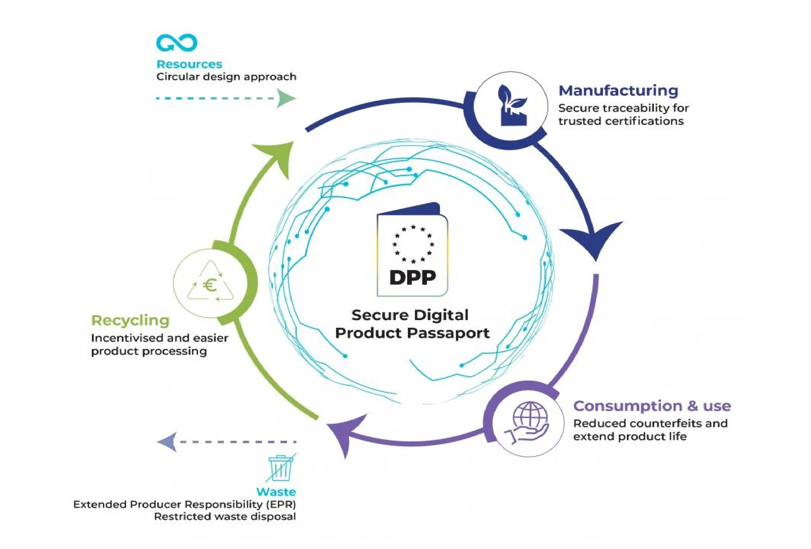
Ms Eva Alonso Núñez (VELAMEN – Spain) provided a perspective from the producers’ side, highlighting the DPP’s potential to enhance competitiveness and standardisation. She strongly supported the concept of transparency, recognising DPP as a valuable tool to showcase progress in areas such as decarbonisation, carbon footprint reduction, use of recycled materials and product traceability.
Also addressing the topic from a producers’ perspective, Mr Javier Martinez Elices (Textil Santanderina – Spain) stressed the need for extensive guidance and support from public authorities, particularly for SMEs. Among the main challenges related to this instrument, he identified the high level of detail required and the difficulties companies may face in collecting and managing such information.
Finally, Mr David Allo (TEXFOR – Spain), while recognising the limits of a highly fragmented sector like the textile industry, highlighted how this instrument, if applied correctly, can ensure smooth information flows across the value chain. In this regard, he took the opportunity to underline the strategic role of clusters in supporting SMEs through coordinated approaches, pilot projects, regional cooperation, and EU funding to facilitate its effective use.
TOWARDS A SHARED MEDITERRANEAN VISION
Overall, the roundtables highlighted key enabling factors for EPR and DPP implementation, including regulatory harmonisation, data standardisation and regional cooperation. They also confirmed the potential of these instruments to enhance competitiveness while supporting the transition towards a circular economy.
Although the application of EPR and DPP in the textile sector is particularly complex due to long, globalised supply chains and strong dependence on consumption patterns, these challenges do not undermine their validity. Instead, they underline the need for institutional, technological and organisational adaptations tailored to the specific characteristics of the textile value chain.
In this context, the GREENSMARTMED event at ECOMONDO helped build a shared understanding of these instruments and broadened the discussion to different territorial scales, including the Mediterranean perspective within the wider European policy framework.
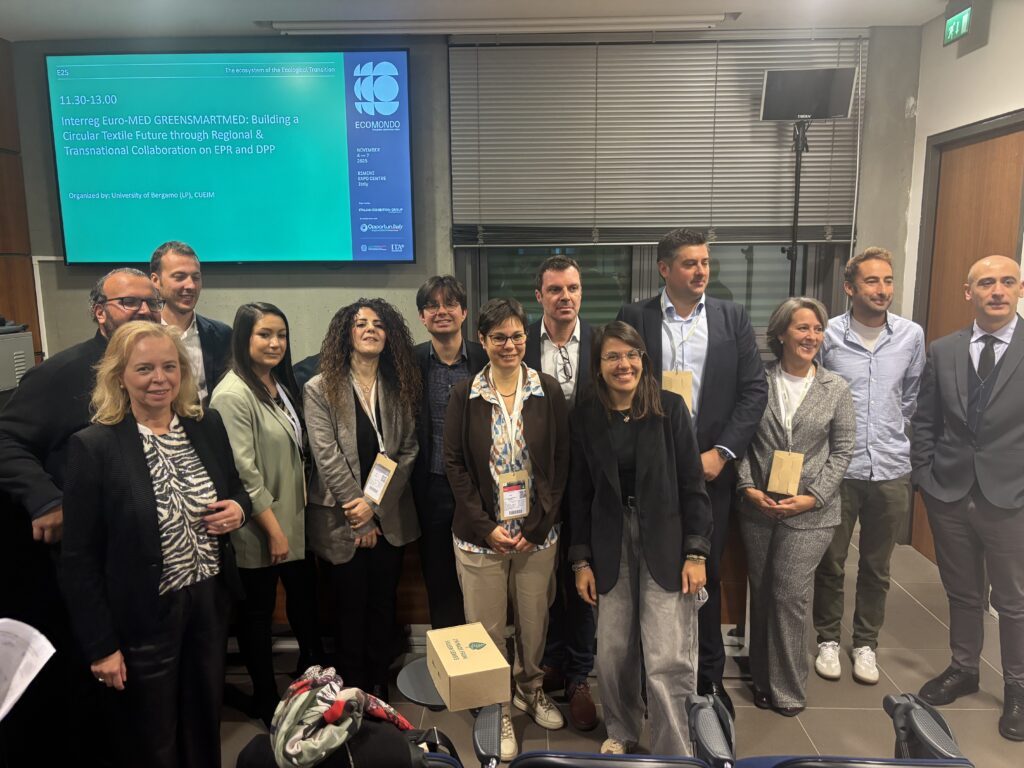
CHECK THE EVENT PRESENTATIONS
- Valentina Oliviero
- Fabiana Pirola
- Fabio Tognocchi
- Andrea Minutolo
- Sirma Zheleva
- Natasha Sivevska
- Claudio Brugnoni
- Javier Martinez Elices
WATCH THE INTERVIEWS TO THE SPEAKERS HERE.