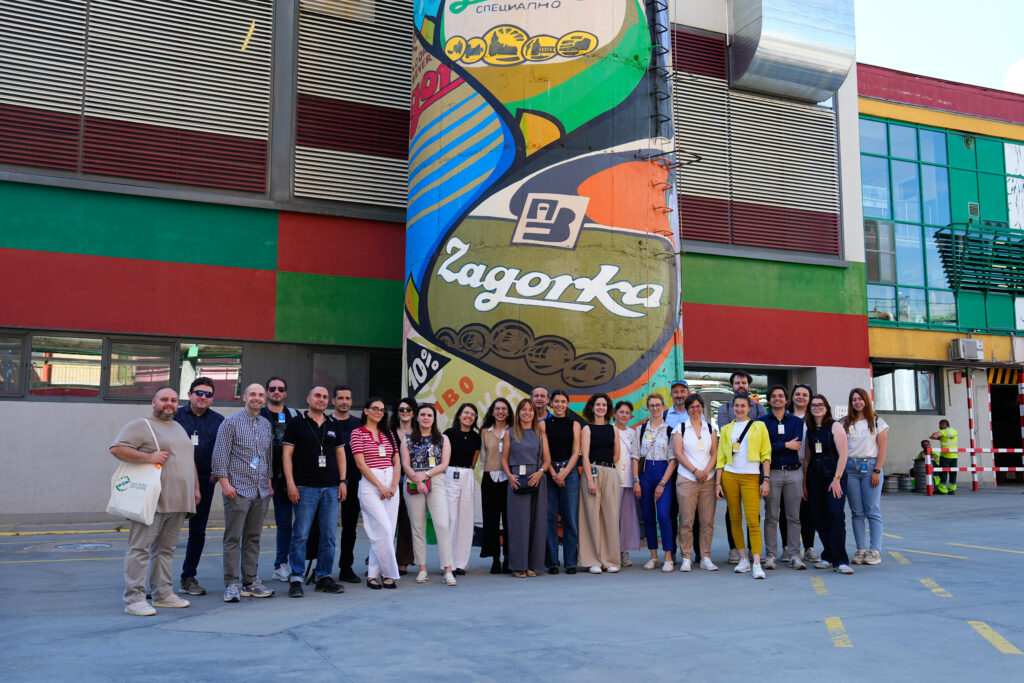
Every journey begins with a challenge and the possibility of transformation.
Ours began almost three years ago, shaped by a shared vision: innovation does not happen in isolation. It emerges when regions, policymakers, research organisations, clusters and SMEs choose to work together. From this vision, GREENSMARTMED took shape, setting out to explore how cooperation across the Mediterranean can accelerate the green transition of manufacturing ecosystems.
As the project approached its final milestone, partners gathered once again for the Final Conference in Stara Zagora, hosted by the Regional Economic Development Agency of Stara Zagora and supported by the entire partnership. A moment of collective reflection on what has been achieved, learned, and, above all, what can continue to grow beyond the project’s lifetime.
DAY 1: A shared journey, shared synergies
The first day unfolded as a collective journey through three years of collaboration, experimentation and connection across the Euro-MED area.
A recurring message quickly emerged: the true value of a project lies in its ability to generate impact well beyond its formal duration. In this sense, Isabelle Nobio from the Joint Secretariat of the Interreg Euro-MED Programme recognised GREENSMARTMED as a strong example of how partnerships can activate meaningful connections across different layers of the Programme architecture. Throughout its lifetime, partners acted not only as implementers, but as enablers. Extending outreach, amplifying messages, and helping embedd the project’s work within wider innovation ecosystems. This culture of cooperation and knowledge sharing is what now forms the foundation of its legacy.
This perspective was echoed by Sarai Matillas of MedWaves, speaking on behalf of the Innovative Sustainable Economy Mission, who highlighted GREENSMARTMED’s concrete contribution to a growing collaborative ecosystem. From active participation in the Community of Practice, to Mentoring and Twinning Programme activities with Birzeit University (Palestine), and the contribution to policy innovation alongside the Generalitat de Catalunya within one of the Transformative Policy Lab of the Dialogue4Innovatio project, GREENSMARTMED demonstrated how cooperation can translate into tangible, cross-border impact.
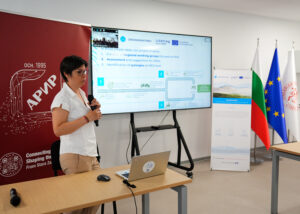
Fabiana Pirola from the University of Bergamo, Lead Partner of GREENSMARTMED concluded by highlighting the project’s methodology, built on strong collaboration among innovation stakeholders. By fostering dialogue, knowledge sharing, and co-creation between businesses, institutions, researchers, and local communities, the approach aims to drive innovation and support sustainable growth.
GREENSMARTMED: A Bridge between Transnational Cooperation and Local Circular Innovation
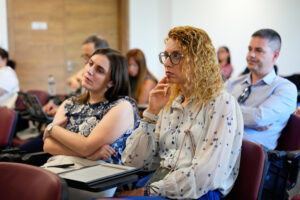 From there, the conversation opened up to a broader exchange of experiences, bringing together initiatives working on circular economy and green innovation, with a particular focus on Bulgaria. Trakia University also shared several projects and good practices, contributing additional perspectives on research and innovation in the fields discussed during the session.
Among the other stakeholders, the Regional Economic Development Agency of Stara Zagora presented the Interreg Europe TEXAD project, dedicated to improving public policies and local practices for the circular management of textile waste. Prevention, reuse, recycling and recovery were placed at the centre of a discussion that also resonated strongly with GREENSMARTMED’s own focus on the textile sector. 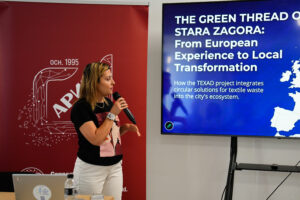
In light of new European regulatory frameworks—such as the Waste Framework Directive and Ecodesign requirements—the exchange helped highlight both the urgency and opportunity embedded in the transition towards more circular textile value chains.
The session continued with Stuyan Kutisky, CEO of Wool Collection, a Bulgarian SME based in Stara Zagora, which offered a grounded, entrepreneurial perspective. Through its business model focused on merino wool garments, the company illustrated how natural, durable and thermoregulating materials can be positioned within a broader narrative of sustainable consumption and production. Its experience reflected a wider shift already visible across the sector: SMEs increasingly aligning competitiveness with sustainability and internationalisation.
Innovation then took a more digital turn with Radix Vet, presented by veterinarian Deliana Terzieva. The AI-powered platform reduces administrative workload by automatically generating clinical reports from consultations, freeing up valuable time for veterinary professionals and improving the quality of care. Tested in Bulgarian clinics, the solution already demonstrates how digital tools can directly contribute to well-being in professional environments.
From veterinary care to industrial innovation, Davide Bonassi presented two textile-focused projects developed under the Next Fashion Program of the Lombardy Region. Both projects — RICA and Titan — are rooted in Smart Specialisation Strategies and a quadruple helix approach, involving industry, academia, public authorities and civil society. While RICA explores automation through robotics and AI to reduce waste and improve efficiency, Titan focuses on reducing the environmental impact of nylon production through sustainable chemistry and traceability systems. Still in their early stages, both projects are expected to be completed by 2028.
This was followed by Alessandro Migliavacca, who introduced three innovation projects developed within the Milano Innovation District (MIND) AirLab: Serena, a personalised rehabilitation platform; Revelo, a smart system for food preservation; and LUPI, a circular economy initiative. 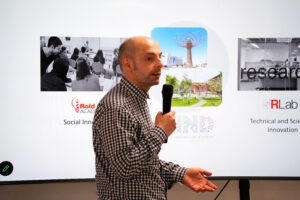
Together, they illustrated how collaborative ecosystems can transform research into scalable, real-world solutions.
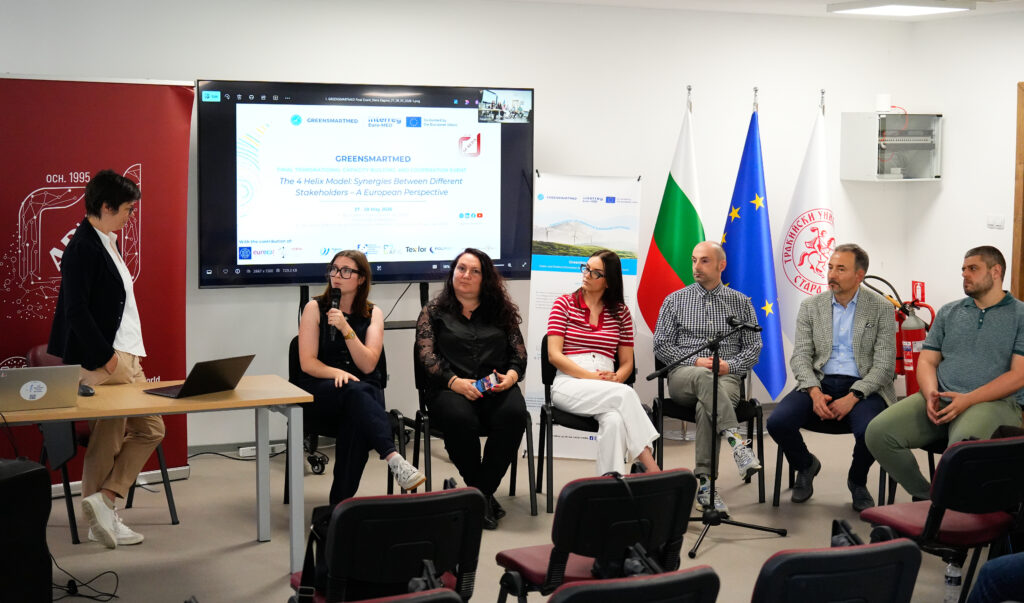
The session concluded with a roundtable discussion revisiting the value of the quadruple helix model. Participants, including Polymeris, CERTH, ROLD and other colleagues reflected on both successes and structural challenges. While the model remains a powerful framework for innovation, issues such as communication gaps, misaligned timelines, limited SME resources and difficulties in involving some actors should be considered and addressed.
Yet, there was broad agreement on one key point: external facilitators and EU-funded projects like GREENSMARTMED are essential in bridging these gaps and creating favourable conditions for collaborativeecosystems.
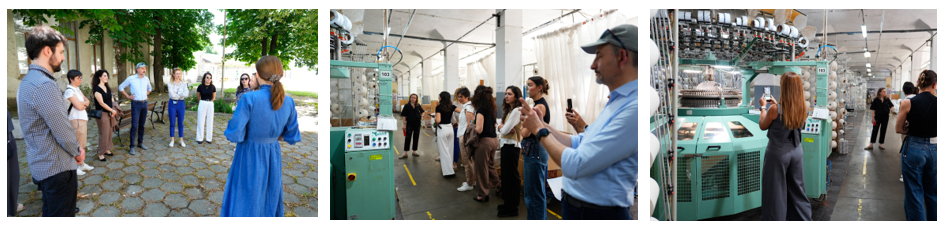
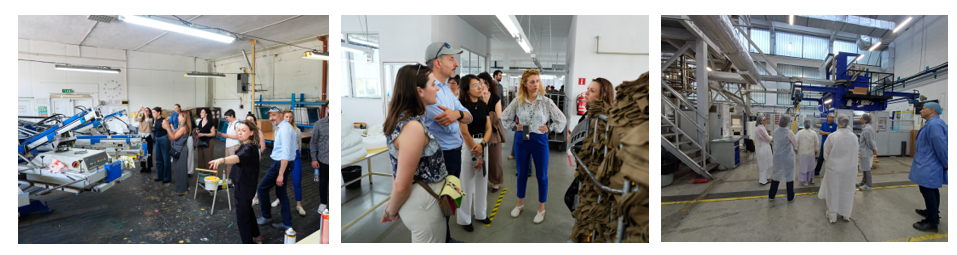
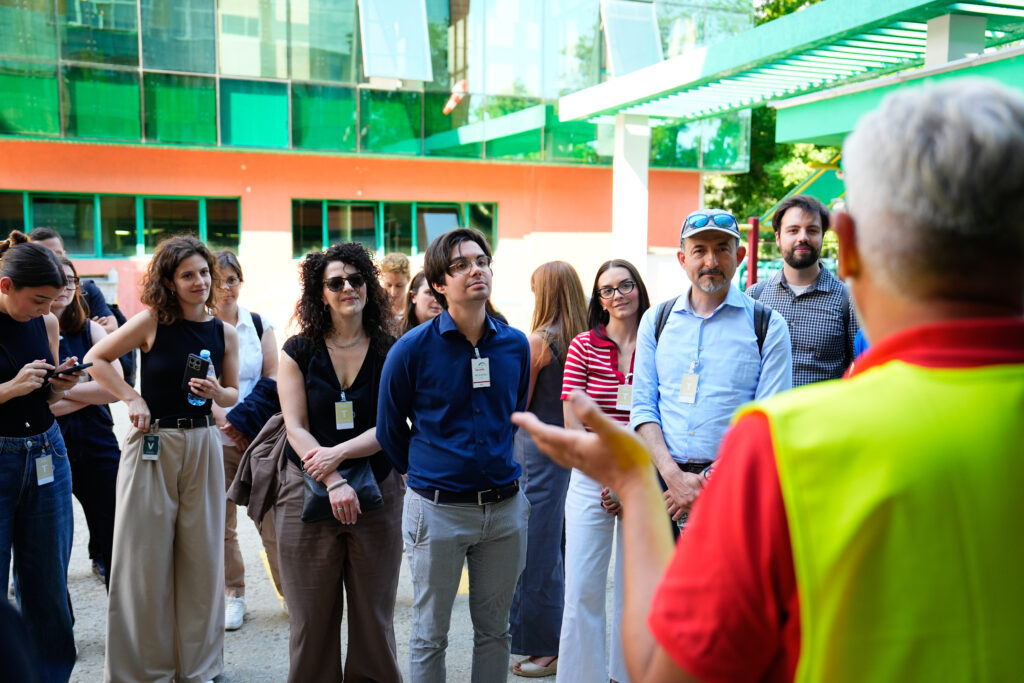
In the afternoon, study visits focused on key sectors such as agrifood, polymers, and textiles sectors.
DAY 2: From reflection to future pathways
The conference was not an endpoint but a starting point for continued engagement.
Partners engaged in deeper discussions on the work carried out through the Regional Core Groups, comparing insights across Lombardy, Catalonia, Auvergne-Rhône-Alpes, Stara Zagora and Western Macedonia. Despite their diversity, the regions revealed shared patterns and challenges, reinforcing the value of a place-based and collaborative approach to supporting SMEs in their green transition.
Attention then turned to refining the GREENSMARTMED methodology itself, incorporating lessons learned and exploring how its tools and practices can continue to support innovation ecosystems beyond the project’s official end. The discussion also opened the door to legacy planning and training pathways, ensuring that the knowledge developed does not remain static but continues to circulate and evolve reaching a wider audience and generation of innovators and changemakers.
Finally, partners explored how project results can be further integrated into public policies, with a focus on strengthening regional and Mediterranean innovation strategies in the years ahead.
CONCLUSION
The second day shifted the focus from reflection to forward-looking action.
It reaffirmed that interregional cooperation is not simply a project method, but a long-term driver of transformation. The experience of GREENSMARTMED showed how stronger, more sustainable and more resilient manufacturing ecosystems can emerge when knowledge is shared, tools are co-created, and regions move in the same direction.
In the end, the message was simple: what begins as a project can become a legacy, especially when collaboration does not stop at the final conference, but continues to shape innovation, policy and practice across the Mediterranean.