What is the key to ensuring that the impact of a project continues even after it ends? In our view, it all starts with dialogue: the most important tool for understanding the needs of territories and assessing whether what has been created can take root in other contexts as well.
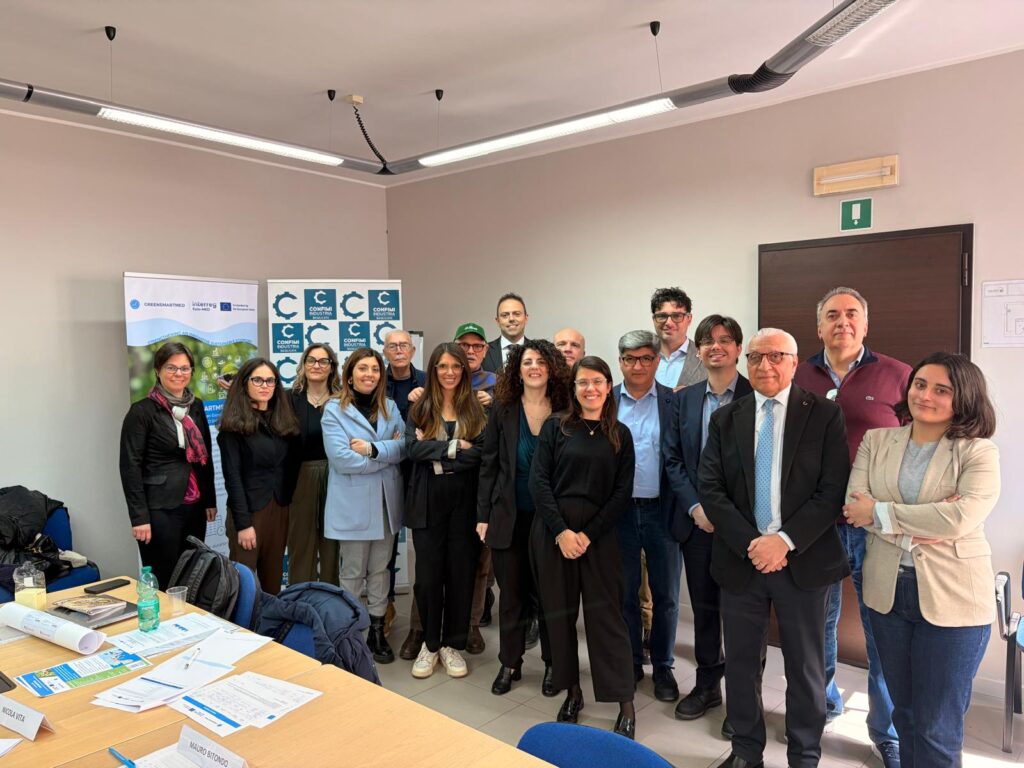
This is exactly what we did on March 24, 2026, in Matera, by opening a dialogue with stakeholders from the local manufacturing ecosystem — exploring their perspectives, challenges, and strengths to assess the potential for transferring the methodology developed by GREENSMARTMED.
On March 24, 2026, in Matera, the GREENSMARTMED Capitalization Workshop — “Tools for Sustainable Manufacturing in Basilicata” — was held. The event was organized by GREENSMARTMED, particularly by the Italian partners University of Bergamo, CUEIM, and AFIL, in collaboration with Exeo Lab and Confimi Industria Basilicata.
The idea behind the meeting was to facilitate an exchange between the project and the Lucanian ecosystem, presenting the tools developed by the project to another territory while exploring the needs of local companies.
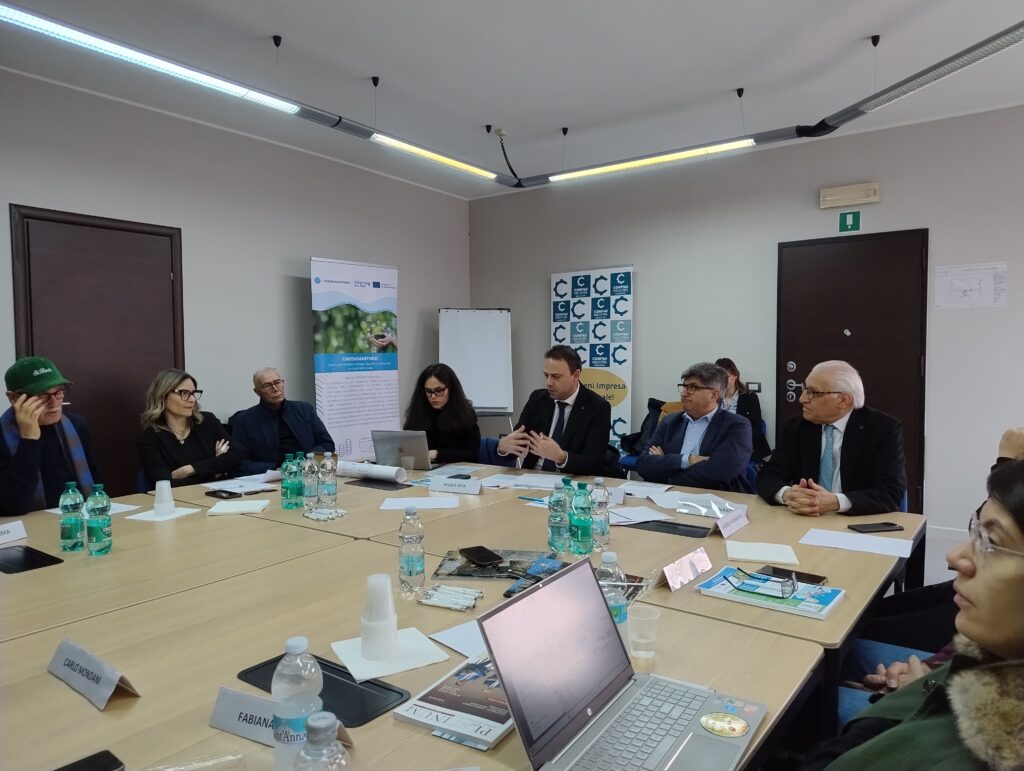
After extensive analysis and pilot activities carried out across the five partner countries — Italy, Spain, France, Greece, and Bulgaria — GREENSMARTMED is now entering a new strategic phase focused on transferring and disseminating its results. In this context, the capitalization workshop represented an important moment for discussion and exchange, aimed at extending the impact of project activities to a new territory and strengthening dialogue with the local production system.
Organized in collaboration with Exeo Lab and CONFIMI Basilicata and hosted by Gruppo I.F.E. S.r.l., the event provided an opportunity to engage local SMEs, gaining deeper insights into their needs and challenges. It became a participatory moment dedicated to exchanging experiences and building new perspectives for innovation, with a particular focus on circular economy models.
Through a program alternating between in-depth sessions and discussions, the initiative fostered direct dialogue among local stakeholders, experts, and project partners, laying the groundwork for future synergies and shared pathways toward more sustainable and competitive manufacturing.
From methodology to application: tools and models for the circular economy
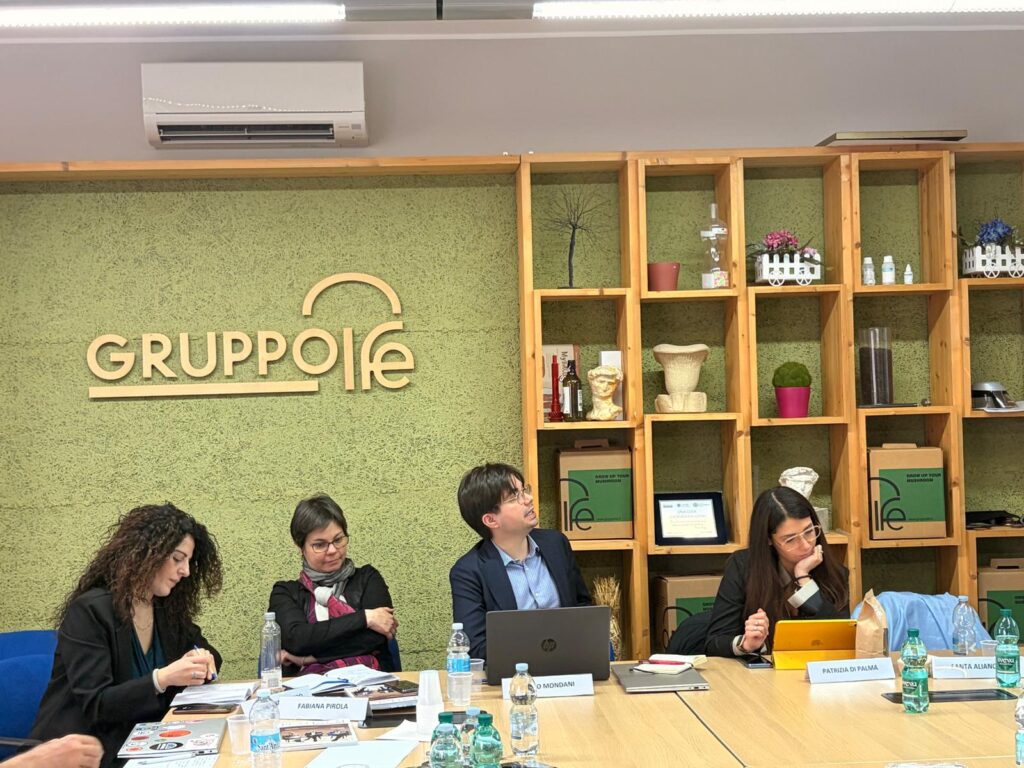
Moderated by Nicola Vita of Exeo Lab, the session explored a wide range of topics, moving from transnational methodological frameworks to the practical application of by-product recovery in mushroom farming.
The session opened with a presentation of GREENSMARTMED’s objectives and results by Fabiana Pirola from the University of Bergamo, Lead Partner. Tracing the project’s origins — stemming from the legacy of FinMED and GREENOMED — Ms. Pirola also placed particular emphasis on the concept of result capitalization.
This aspect was further highlighted by Valentina Oliviero from CUEIM, who positioned GREENSMARTMED within the broader framework of the Innovative Sustainable Economy Mission of the Interreg Euro-MED Programme. Ms. Oliviero emphasized the importance of continuing to create spaces for exchange and leveraging diverse competencies. In this context, she also advocated for the creation of an integrated working group to bring together different perspectives, turning complexity into a concrete opportunity for shared growth—so that one actor’s waste becomes another’s resource, in line with the principles of industrial symbiosis.
The project’s methodological framework was illustrated by Carlo Mondani from AFIL, who also referred to AFIL’s Strategic Communities, which laid the groundwork for the development of Core Groups across different countries. Mr. Mondani provided an overview of activities carried out at the local level, outlining the main challenges encountered in engaging and activating Regional Core Groups, while also highlighting their strengths. Among these, he stressed—drawing from AFIL’s direct experience—the crucial role of intermediary bodies in networking stakeholders and disseminating innovation, noting that sector diversity should not be seen as a barrier to cooperation, as also highlighted by previous speakers. This insight was particularly well received by participants active across different domains.
The first session concluded with a presentation by Benedetto Aracri from ENEA, focusing on applied circular economy models, with particular attention to mushroom cultivation as a best-practice case study. Mr. Aracri illustrated how plant residues and agricultural by-products (e.g., coffee grounds, straw, pruning residues, and brewers’ spent grain) can be valorized—transforming waste into resources—by becoming ideal substrates for cultivating edible mushrooms such as Pleurotus ostreatus and Pleurotus eryngii.
Engaging with companies: needs, challenges, and opportunities for the local system
This was followed by a collaborative session that enabled direct exchange among local industry representatives. Several local SMEs operating in different sectors took part in the meeting:
- WEEE and Critical Raw Materials Recovery: Sogemont Raee S.r.l. and the startup SIPOW S.r.l., working on circular value chains for solar panels and electronic waste.
- Plastic Rigeneration: Ecoplen S.r.l and Ecodesign S.r.l working together in the recycled plastics supply chain, respectively handling the recovery of plastic waste and the production of packaging and containers made from recycled plastic material.
- Bioeconomy and Agriculture: Gruppo I.F.E. S.r.l. and Micotec S.r.l., leaders in sustainable mushroom substrate production.
- Energy: the Renewable Energy Community CER SIMAE, promoting shared green energy.
Participants engaged in mapping circular economy dynamics through a SWOT analysis exercise. It proved to be a highly stimulating activity, revealing that different sectors — such as those represented — often face similar challenges.
Overall, the exercise showed that the local manufacturing system has several strengths, including solid technical know-how, particularly in recycling and agri-food sectors, which provides a strong foundation for sustainable development.
At the same time, some critical issues emerged, such as high operational costs affecting SMEs and still limited levels of process automation. Despite this, significant opportunities are opening up through the creation of new synergies using tools such as RAS, fostering collaboration between research institutions and companies, as well as promoting forms of industrial symbiosis across different production sectors.
Finally, some threats and major obstacles remain, particularly excessive bureaucracy and slow administrative processes, which risk slowing down innovation and investment. Interesting exchanges also took place regarding the use of artificial intelligence in production processes, circular design, and technological advancement in response to the scarcity of virgin raw materials. Participants also emphasized the need for stronger support from the scientific community on industrial development issues that affect us all —particularly in relation to plastic recycling.
In light of this overall picture, the discussion and interactive session made it possible to identify strong potential for the development of integrated circular systems in Basilicata. Local actors already demonstrate clear awareness of their limitations, opportunities, and needs, with concrete ideas and proposals ready to be implemented at different levels. From our perspective, even a preliminary exercise like this — mirroring the work carried out in recent years across the project’s local contexts — confirms that everything begins with dialogue among stakeholders at all levels.
The region shows significant opportunities in the valorization of recycled plastics, the recovery of electronic waste and solar panels, and the production of sustainable agricultural substrates from organic residues.
Towards new synergies: continuity, networks, and sustainable development for the region
To be effective, sustainability must translate into concrete actions and operational tools, becoming a factor of innovation, efficiency, and competitiveness for companies. Initiatives like this demonstrate how European projects become concrete tools for local development
Nicola Fontanarosa, President of Confimi Industria Basilicata
The event proved to be stimulating and rich in insights, paving the way for a shared path of reflection and action with local intermediary actors such as Exeo Lab and CONFIMI, which are called upon to guide and support SMEs in innovation and sustainable development processes — starting from a manufacturing ecosystem already inclined toward cooperation and built on long-standing relationships.
In this context, strengthening the network and ensuring its continuity through CONFIMI represents a strategic step. The objective is to leverage a clear methodology: needs analysis, co-design, and the identification of funding opportunities capable of supporting the initiatives of local SMEs over the long term.
As highlighted during the meeting, there is a strong and positive inclination toward collaboration: local actors already know each other, work with intermediary bodies, and have begun paths of international openness, including exchanges with foreign startups. Altogether, these elements represent a concrete added value that can accelerate the impact of future actions.