Green Manufacturing Stories brings together the voices of the organisations and people who have contributed to shaping greener and more innovative manufacturing ecosystems across the Mediterranean. Throughout this series, we explore regional experiences, success factors, and lessons learned from the implementation of this approach, highlighting the value of cooperation in accelerating the transition towards more sustainable production models.
To understand how the GREENSMARTMED methodology has been implemented on the ground, it is important to start from the organisations involved and the specific characteristics of their local ecosystems. Each partner operates within a unique manufacturing context, shaped by local industrial structures, innovation actors and sustainability challenges.
Hello Carlo, could you briefly introduce your organisation and explain why participating in the GreenSmartMed Project was strategically important for you?
AFIL – Lombardy Intelligent Factory Association – is the regional cluster dedicated to advanced manufacturing of the Lombardy Region. We bring together companies, universities, research centres, and public authorities with the aim of fostering innovation, competitiveness, and sustainability within the manufacturing sector.
Our mission is to support the transformation of industry towards Industry 4.0 and 5.0 paradigms, with a strong focus on digitalisation, sustainability, and skills development.
Participating in the GREENSMARTMED Project was strategically important for us because it aligns perfectly with our priorities: supporting SMEs in their green transition and strengthening interregional cooperation in the Mediterranean area. As AFIL acts as a connector within the regional ecosystem, facilitating collaboration, technology transfer, and access to European opportunities, the project offered to us the unique opportunity to propose a structured framework to our associates, enhancing our role in enabling sustainable innovation, while also allowing us to benchmark our regional ecosystem and exchange best practices within the Lombardy Region and with other European regions.
What are the main characteristics and strengths of your local manufacturing ecosystem?
As part of the four motors for Europe together with Catalunya, Auvergne-Rhones-Alpes and Baden-Wutternberg, the Lombardy manufacturing ecosystem is one of the most advanced and diversified in Europe. It is characterised by a strong presence of SMEs, often highly specialised and integrated into global value chains, as well as large industrial players acting as innovation drivers.
One of its key strengths is the close collaboration between industry, academia, and research organisations, which fosters continuous innovation and knowledge transfer. The region also benefits from a well-established network of clusters and innovation hubs, supporting companies in adopting advanced technologies and sustainable practices.
Moreover, Lombardy has a solid tradition in key sectors such as machinery, textile and plastics, combined with increasing investments in digitalisation and green technologies. This makes the ecosystem highly dynamic, resilient, and well-positioned to address current industrial and environmental challenges.
Why did you consider the GREENSMARTMED methodology to be particularly relevant for your territory?
The GREENSMARTMED methodology is particularly relevant for our territory because it provides a structured and collaborative approach to supporting SMEs in their green transition. In a region like Lombardy, where many companies are aware of sustainability challenges but may lack the tools or strategic guidance to act, such a methodology can make a significant difference. Indeed, it enables the identification of regional strengths and gaps, while promoting cross-sectoral and transnational collaboration. This is especially valuable for SMEs, which can benefit from shared knowledge, new partnerships, and access to innovative solutions developed in other regions. Furthermore, the methodology aligns well with regional innovation strategies and policy frameworks, allowing us to integrate project outcomes into long-term development plans. For AFIL, it represents an opportunity to strengthen our role as a facilitator of sustainable industrial transformation and to deliver tangible impact at the regional level.
One of the key elements of the project has been the activation of local Core Groups bringing together SMEs and quadruple helix stakeholders. Through workshops, exchanges and collaborative activities, partners tested the methodology and adapted it to their local realities.
How was your local Core Group formed? Which types of stakeholders were involved, and how many SMEs participated?
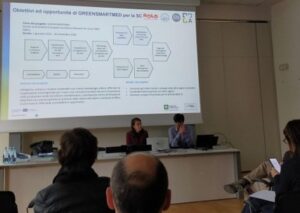 AFIL built on its already established Strategic Communities model. This laid the groundwork for the development of the GREENSMARTMED Core Groups across the participating countries, providing a tested framework for stakeholder engagement and ecosystem building.
The Strategic Communities in Lombardy (Advanced Polymers, De- and Remanufacturing for Circular Economy, Machinery, Secure and Sustainable Food Manufacturing) have been established through a structured stakeholder engagement process led by AFIL during the years, leveraging its existing network within the regional manufacturing ecosystem. We identified and invited key actors who are actively involved in innovation and sustainability processes, ensuring a balanced representation of the quadruple helix.
The groups include manufacturing SMEs, large companies, universities, research and technology organisations, innovation hubs, and public authorities. Particular attention was given to involving SMEs from different sectors, as they are the primary target of the GREENSMARTMED methodology.
In total, the Strategic Communities engaged several stakeholders, with SMEs and Large Companies representing a significant share of participants. Their involvement was essential to ensure that the discussions and activities remained grounded in real industrial needs and challenges.
What main activities did you carry out with the Core Group, and which participants or stakeholder groups were particularly active or engaged?
With the Core Groups, we organised a series of interactive activities aimed at fostering collaboration and 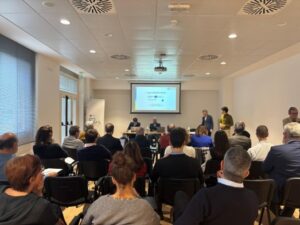 identifying opportunities for sustainable innovation. These included regular meetings in-person, training workshops, co-creation sessions, mapping exercises, and bilateral meetings focused on analysing needs, challenges, and potential areas for cross-sectoral cooperation.
We also facilitated discussions around green transition pathways, innovation priorities, and potential synergies with other regions involved in the project. SMEs were particularly engaged when discussions focused on practical challenges and concrete opportunities, such as access to technologies and funding. At the same time, research organisations and innovation intermediaries played a key role in supporting the process by providing technical insights and facilitating knowledge transfer.
How was the methodology initially received by the participants? Did you face any challenges during its implementation?
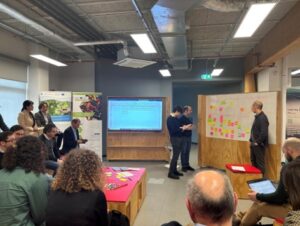 The methodology was generally well received, especially due to its practical and collaborative approach. Participants appreciated the opportunity to engage in structured discussions and to connect with other stakeholders at both regional and transnational levels. However, as with many multi-stakeholder processes, some challenges emerged during the initial phases. In particular, ensuring consistent engagement from SMEs required continuous effort, as companies often face time and resource constraints.
To address these challenges, we focused on simplifying communication, tailoring activities to participants’ needs, and emphasising the concrete benefits of participation. Over time, this helped increase engagement and build trust among stakeholders, leading to more active and meaningful contributions.
Beyond the local dimension, the project provided partners with the opportunity to learn from each other and exchange practices across the Mediterranean. Such transnational dialogue is a core feature of the Interreg Euro-MED Programme, helping to identify approaches that can be transferred or adapted to different contexts.
During the project, was there a practice, approach or experience from another partner country that particularly inspired you or that you found especially relevant for your context?
A key inspiring moment for AFIL was the Transnational Event held in Thessaloniki, Greece, in May 2025, 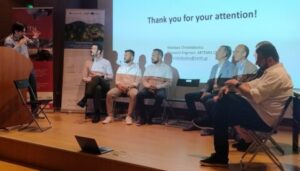 which represented a crucial opportunity to directly engage with other partner regions, exchange experiences, and observe how different ecosystems approach the twin transition. In particular, the event highlighted the value of structured interaction among stakeholders, combining strategic discussions with practical examples and collaborative sessions. Seeing how other regions facilitated dialogue between companies, research organisations, and public actors provided valuable insights for our own activities in Lombardy. AFIL contributed to this event inviting four Lombardy stakeholders, which were actively involved during the activities. This experience reinforced the importance of creating well-designed moments of exchange and co-creation, and we integrated these learnings into our regional approach, placing greater emphasis on interaction, peer learning, and concrete outcomes for our associates.
In your view, what is the main added value of participating in a transnational cooperation project within the Interreg Euro-MED Programme compared to working on a similar initiative at the national level?
From AFIL’s perspective, the main added value of participating in a transnational cooperation project lies in the possibility to access a wider ecosystem of knowledge, practices, and competencies that are not available at the national level alone. Indeed, transnational cooperation creates opportunities for long-term collaboration between regions, enabling the development of joint initiatives and strengthening the international dimension of our cluster. For our associates, this translates into greater exposure to new markets, partners, and solutions, ultimately increasing their competitiveness and resilience.
After several months of collaboration with local stakeholders and project partners, the GREESMARTMED journey has produced insights, relationships and practical results with the potential to extend beyond the project’s duration.
Looking back at the experience, was there a key moment in the process that you consider particularly significant?
Surely, the shift towards interactive sessions, where all the stakeholders openly discussed their challenges and explored potential solutions together during the Core Groups meetings, was a turning point. It demonstrated the real value of the methodology in fostering trust, encouraging participation, and generating meaningful exchanges. This moment was important because it showed that the process was not only theoretically sound, but also capable of delivering tangible engagement and setting the basis for longer-term collaboration within the regional ecosystem.
What concrete outcomes do you expect will remain in your territory after the project?
First, the Strategic Communities represent a key legacy, as they have created new connections among stakeholders and strengthened existing ones. Secondly, the methodology and tools developed within the project will continue to support our activities, especially in guiding SMEs through their green transition and in structuring more effective innovation processes. We also expect the project to generate follow-up initiatives, including new collaborations (such as the Smart Polymers Congress with Polymeris, which will be held on 17-18 November 2026 in Milan), pilot projects, and potential participation in other European Programmes. More broadly, the experience contributes to reinforcing a shared awareness of sustainability challenges and opportunities within the manufacturing ecosystem at regional and interregional levels.
What recommendation would you give to other territories or organisations interested in replicating the approach developed by GREENSMARTMED?
One key recommendation from AFIL would be to invest time and effort in building and maintaining strong stakeholder engagement from the very beginning. The success of this approach largely depends on the active involvement of the ecosystem. It is also important to adapt the methodology to the specific characteristics of the local context, rather than applying it in a rigid way. Flexibility, clear communication, and a focus on practical value for participants are essential to ensure sustained interest and participation.
From ecosystem building to concrete industrial transformation, the GREENSMARTMED experience comes to life through the voices of its beneficiaries. To learn how organisations are addressing the challenges and opportunities of the green transition in practice, watch the interviews conducted by AFIL with CENTROCOT and ROLD, representing the textile and plastics sectors. Discover their experiences, insights, and perspectives on the future of sustainable manufacturing.